
Daytime load match
Size the array to your daytime base load. Exported power earns far less than the tariff you avoid, and export needs SSEG approval from the municipality or Eskom.
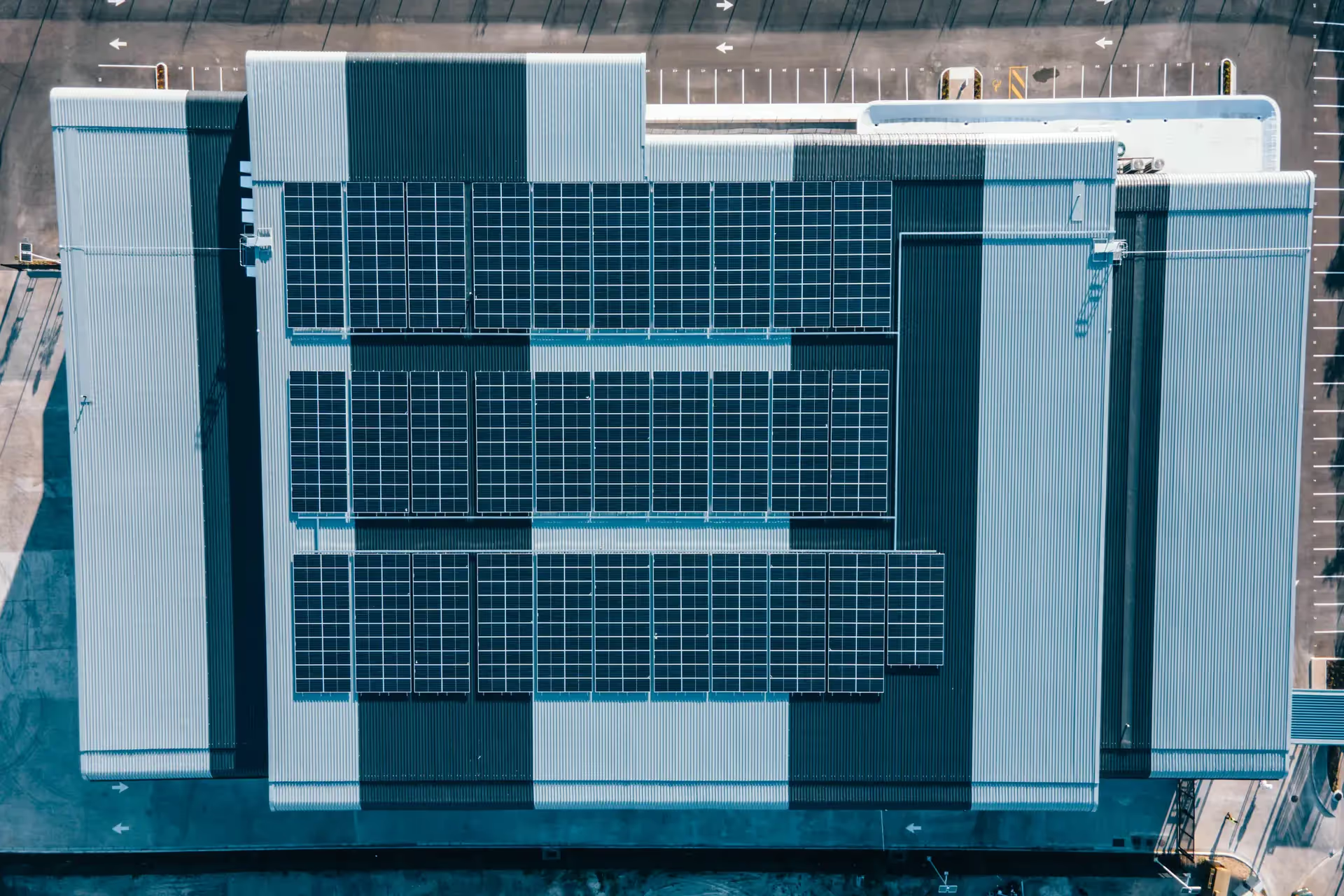
What drives solar savings and payback for factories, warehouses, farms, office parks and shopping centres, for factories and warehouses in Midrand, Johannesburg and across Gauteng.
Solar cuts a factory’s electricity cost on every kWh the plant uses while the sun is up, so the saving depends mostly on how well your daytime load matches solar output, and on the tariff you avoid. Simple payback = net installed cost ÷ first-year saving. GreenCape’s published model of a bought 200 kW system came to a simple payback of about 6 years (Mar 2026). Batteries can add savings on time-of-use and demand charges. Since March 2025, businesses that own PV of 1 MW or less can deduct 100% of the cost in year one under Section 12B. A PPA or lease reduces the upfront capital the business needs.
We calculate payback for your specific plant from your own bills and load profile. See commercial and industrial solar. If capital is a constraint, a PPA or lease is available directly or through a finance partner.
Four factors determine your plant’s savings and payback:
Size the array to your daytime base load. Exported power earns far less than the tariff you avoid, and export needs SSEG approval from the municipality or Eskom.
On time-of-use tariffs (e.g. Eskom Megaflex, City Power TOU), solar offsets peak and standard-period energy. A battery can also cut demand (kVA) charges.
Roof type, mounting, inverters, storage and grid-connection work. GreenCape’s cost multipliers against a plain rooftop installation are 1.30–1.50 for an asbestos-replacement roof, 1.10–1.20 for ground-mount and 1.25–2.00 for a carport (GreenCape, Mar 2026). Under Section 12B, a business that owns PV of 1 MW or less and uses it in its trade can deduct 100% of the cost in the first year. Check the current rules with your tax adviser.
Larger annual tariff increases shorten payback. Eskom direct tariffs rose 8.76% on 1 Apr 2026, and 8.83% is approved for 1 Apr 2027 (Engineering News, 10 Mar 2026). Panels lose a little output each year, and maintenance has a cost.
First-year saving = self-consumed kWh × avoided R/kWh (per TOU period) + demand-charge saving − O&M
Simple payback (years) = (installed cost − Section 12B tax saving, if you own it) ÷ first-year saving
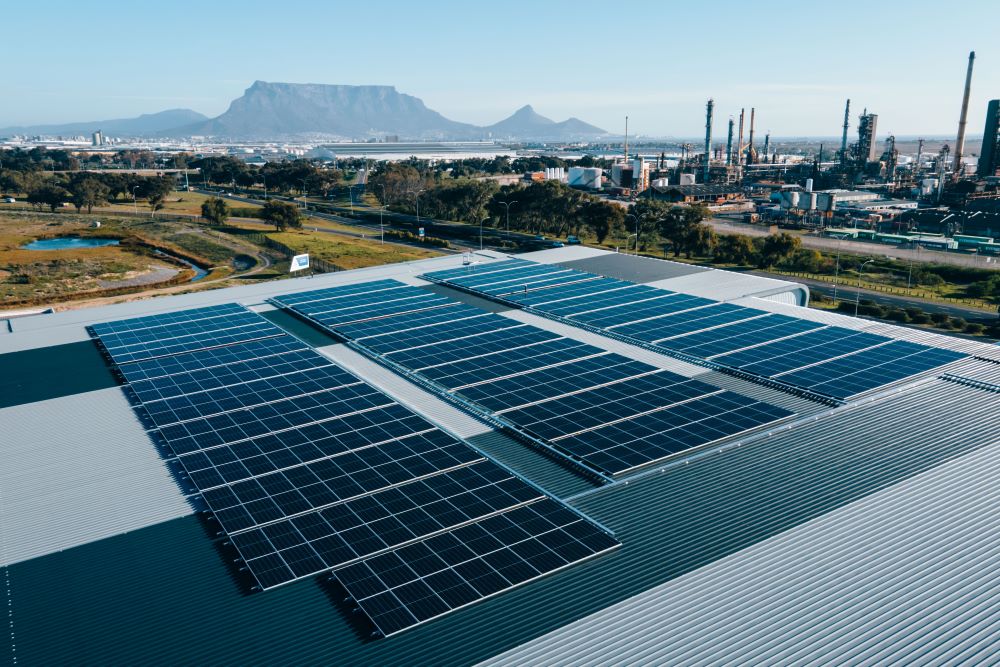
This example is GreenCape’s published model, not a Green Leaf project. Source: GreenCape, Solar PV for businesses in the Western Cape, Mar 2026, Table 2.
| Assumption or result (GreenCape) | Value |
|---|---|
| System size | 200 kW |
| Yield | 1,200 kWh/kW/yr (Western Cape) |
| Daytime tariff | Megaflex standard rate |
| Installed cost | GreenCape’s 2025/26 benchmark (see source) |
| System life | 20 years |
| O&M plus insurance | 5% a year |
| Degradation | 10% over 20 years |
| Inverter replacement | Year 10, at 20% of cost |
| Tariff escalation | +8.76%, then +8.83%, then 4% a year |
| Result: bought with cash | Simple payback 6 years |
| Result: 10-year debt at 12% | Payback 10 years |
Modelled for a Western Cape site; not a Gauteng or Green Leaf result.
They can. A battery adds value through peak shaving (cutting the demand peaks that set your kVA charges), arbitrage (storing cheaper off-peak or solar energy and using it in expensive peak periods) and load shifting (moving solar energy from midday into the evening). How much it adds depends on the gap between your peak and off-peak rates and on your demand charges, so we model it from your own tariff. See battery energy storage (BESS).
Businesses that own PV of 1 MW or less can deduct 100% of the cost in the year it is first used; larger systems 50/30/20 over three years. The owner claims it, so under a PPA the provider claims it, not you. The 125% Section 12BA allowance ended on 28 Feb 2025 (SARS IT39; Forvis Mazars, 27 Mar 2025). Ask your tax adviser.
Buying the system outright costs the most upfront, but the factory keeps the whole saving and, as the owner, can claim Section 12B. GreenCape notes that external financing “increases the overall cost of the solar PV system over its lifespan” (GreenCape, Mar 2026), which its own model shows: the same 200 kW system pays back in 6 years with cash and 10 years with debt.
A PPA reduces the upfront capital a plant needs: the provider owns the system and you pay for the solar electricity you use. It suits plants that would rather keep capital for production. PPA and lease options are available directly or through a finance partner. See solar PPA, lease or buy for business.
For what a system costs to install, see what a 100–500 kW commercial solar system costs. For systems we have built, see our projects.

GreenCape’s published model of a bought 200 kW system came to about 6 years (Mar 2026). Your payback depends on your load, tariff and system cost, so we calculate it from your bills.
Daytime load match, your tariff and the system cost. We calculate it for each plant from its own bills and load profile.
Not usually for savings alone. Batteries make sense for peak and demand-charge reduction or backup. See battery energy storage (BESS).
It depends on the municipality. Systems connected to the grid generally need SSEG approval from the municipality or Eskom, and an SSEG application through your local energy provider starts the process of selling excess power back. The inverters we install can feed energy back into the grid, but this function is activated only on request. See SSEG applications. City Power runs zero export until feed-in approval is in place, and Ekurhuleni needs a four-quadrant AMR meter.
Yes. If you own the system and use it in your trade, PV of 1 MW or less qualifies for a 100% deduction in the first year. The 125% allowance ended on 28 Feb 2025.
Businesses can use a PPA or lease, available directly or through a finance partner. Both reduce the upfront capital the business needs. See solar PPA, lease or buy for business.
A site assessment confirms usable roof area and structural capacity.
Send your bills and load profile with the enquiry form. We will estimate savings and payback for your plant. The wider service is on commercial and industrial solar.
Contact page form or call the office on 011 705 2427.